
Joseph Roetheli, PhD
Protein’s importance has been dominating the human food world, with “high protein” snacks now dominating grocery shelves. This may have pet owners wondering, “Is my dog getting enough high-quality protein, too?” Dogs require protein in their diets just like humans, but many owners don’t fully understand how much and what kind of protein is best for their dogs.
The first thing dog owners should look at when selecting food or treats is the “guaranteed analysis” section. Here, owners can see the guaranteed amount of protein in the product, meaning that there will never be less than that amount, but there could be slightly more. Owners should look for foods with at least 22%-28% of protein and for treats that positively add to the diet’s protein content, not dilute. Higher protein treats are available and can be a great way to control dogs’ weight.
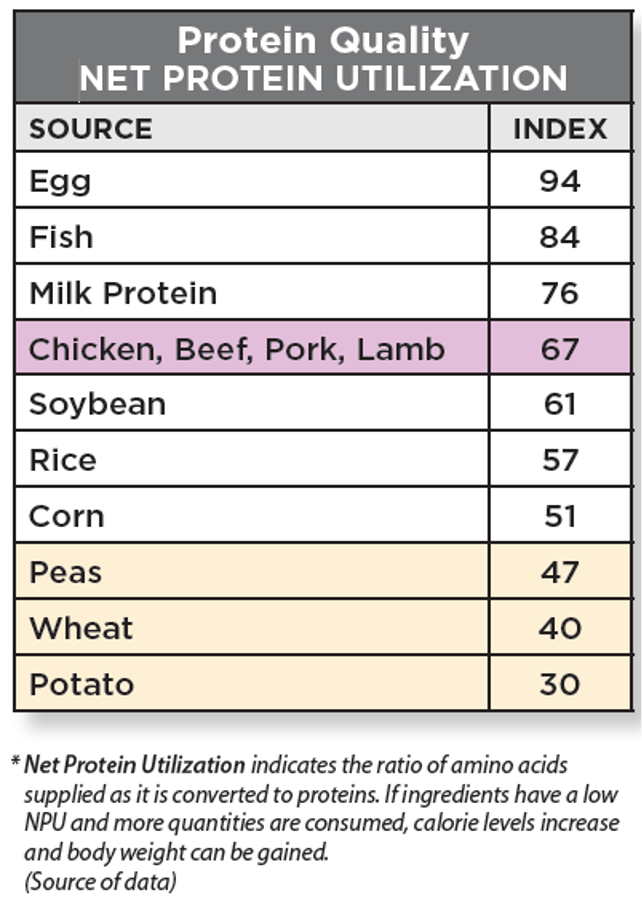
Protein doesn’t exist solely as itself, proteins are formed by amino acids, 22 of which are required for a healthy diet. Certain proteins deliver certain amino acids, and not all protein sources are equally efficient in diets. According to the Net Protein Utilization Index (NPU), proteins rank on a partial scale of 94-30 in terms of efficiency in delivering all 22 required amino acids plus taurine which some include in the amino acids list, but it is a distinct ingredient. Proteins with higher NPUs are superior in delivering amino acids than those with lower NPUs.
Sources like egg, fish, milk (casein), and meats have higher amino acid delivery, meanwhile plant-based proteins like wheat and potatoes deliver the least. Not only do they not deliver equally, but some sources are also full of starches. Starch is necessary for every diet, but in moderation. If your dog consumes more starch than it burns off, it quickly converts to fat. Foods like potatoes, corn, peas, rice, and wheat are heavy in starch, and can be a sneaky culprit for your dog’s weight issues. Excess weight remains a major health concern for dogs, with 55-60% of U.S. dogs over two years old suffering from being overweight or obese. This addition weight causes many health complications, including strain on joints, connective tissue, and predisposition to a host of conditions or diseases.
The protein content and source both matter when deciding what your dog consumes. An easy way to compare both is through the Protein Index of Quantity and Quality. Developed by Dr. Joe Roetheli after his 30+ years of experience in the pet industry, this simple equation makes it easy for owners to compare dog food products’ protein value. Simply multiply the NPU of the first listed protein in the ingredients list by the percent of protein in the guaranteed analysis section of the pet food or treat label.
Quality and Quantity combined paint a clearer picture of what your dog’s eating. For example, let’s say a treat had high protein, 25%, but its first ingredient was wheat. 25 x 40 = 1,000, which is half of Dr. Roetheli’s suggested minimum of 2,000. Let’s also consider how much starch exists in wheat that is now being introduced to the dog’s diet. For our next example, let’s use Dr. Roetheli’s new dog treat, Yummy Combs. The treat’s chicken formula lists chicken as the first ingredient, making the NPU 67. The treats guarantee 44% protein, making the Protein IQQ 2,948.
While humans are racing to make their daily protein goals, it’s important that our beloved pets aren’t missing out on the essential nutrient, either. Pet’s Best Life hopes to not only provide nutritious, multifunctional treats, but to also educate owners for the betterment of all our canine companions. All so you can, “Love Your Dog Longer.”





Updates, coupons, deals, and more!
Type anything...
We use cookies to provide you the best possible experience on our website. You consent to the usage of cookies by continuing to view our website. See our Privacy Notice for more information.